Solar Security Light Buying Guide Kenya (2026): Flood Lights, Sensor Lights and Real Watts
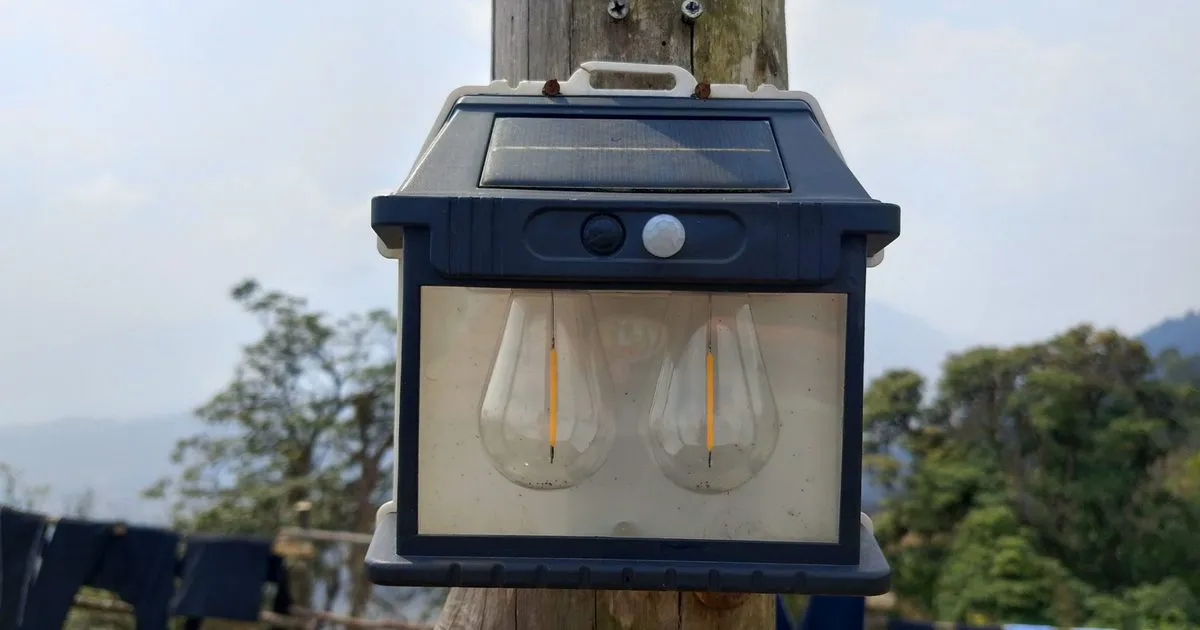
Solar security lights are one of the cheapest ways to light a gate, compound, farm or shop front without wiring or electricity bills. They are also a product where labels can mislead: a light sold as "300W" may use only a fraction of that. Knowing what to check saves you from lights that are dim by 10 p.m.
Quick answer: Judge a solar light by its panel size, battery capacity and real LED output (lumens), not the big "W" number on the box. Choose an IP65 or IP66 outdoor rating, a motion (PIR) sensor mode to save battery, and a model with a separate panel if the light must sit in shade. Mount it 2.5–4 m high, put the panel in full sun with a slight tilt, and expect to replace the battery after a few years.
How Do Solar Flood Lights Work?
A solar panel charges a battery during the day. A light sensor switches the LEDs on at dusk, and they run from the battery through the night, either at a steady level or brighter when the motion sensor detects movement. Everything depends on the panel collecting enough energy and the battery storing it.
Types of Solar Security Lights
| Type | Description | Best for |
|---|---|---|
| All-in-one wall light | Panel, battery and LEDs in one unit | Doors, small walls in full sun |
| Flood light with separate panel | Light on the wall, panel on the roof via a cable | Gates, compounds, verandas in shade |
| Motion sensor light | Dim or off until movement, then bright | Security, saving battery |
| Solar street / pole light | Larger unit on a pole | Driveways, estates, farm roads |
Why the "Watts" on the Box Can Mislead
Many solar lights are labelled 100W, 200W or 300W, but that number is often not the real power drawn by the LEDs. A small panel cannot charge a battery big enough to run a real 300W light all night. Compare these instead:
| What to check | Why it matters |
|---|---|
| Panel size and rated watts | A bigger panel charges the battery faster, especially in cloudy weather |
| Battery capacity (Wh or mAh) and type | Lithium iron phosphate (LiFePO4) usually lasts longer than ordinary lithium-ion |
| Lumens | The real brightness; compare lumens, not watts |
| Lighting modes | Dusk to dawn, motion only, or dim + bright on motion |
| IP rating | IP65/IP66 for rain and dust |
| Warranty | Shows how long the seller expects it to last |
A useful test: hold two lights of different "wattage". If the panel and body are the same size, the real difference is probably small.
How Long Do Solar Flood Lights Last?
LEDs can last many years, but the battery usually fades first, often after two to three years of nightly use, depending on quality and heat. A light that is bright at first but dims earlier each night has a tired battery. Lights with replaceable batteries and separate panels are cheaper to keep running.
How to Install Solar Flood Lights
- Pick a spot where the panel gets full sun most of the day, with no shade from trees, water tanks or walls.
- Kenya sits on the equator, so the sun is high: tilt the panel slightly (around 10–15°) so rain washes off dust.
- Mount the light 2.5–4 m high, pointed at the gate, door or path, out of easy reach.
- Run the panel cable along the wall with clips and seal the entry points.
- Switch on and let it charge for a full sunny day before the first night.
- Wipe the panel every few weeks; dust cuts charging.
How to Replace a Solar Flood Light Battery
- Switch the light off and take it down.
- Open the battery cover (usually screws at the back).
- Note the battery type, voltage and connector, and photograph the wiring.
- Fit a battery with the same voltage and type, and the same or slightly higher capacity.
- Reseal the cover so water cannot enter, refit and charge for a full day.
For lighting a whole home or running appliances, a full system is better: see solar backup system price and solar panel price in Kenya.
Worked Example: Lighting a Rural Gate
A farmer bought a cheap "300W" all-in-one light for his gate, under a tree. It went dark by 11 p.m. He replaced it with a flood light whose panel sits on the roof in full sun, set it to dim mode with bright-on-motion, and mounted it 3 m high. It now lasts until morning, and the bright flash on movement alerts the dogs and the watchman.
Common Mistakes to Avoid
- Choosing by the watt number on the box.
- Panels installed in shade.
- Lights mounted too low and easy to steal or damage.
- Never cleaning the panel.
- Throwing away a light when only the battery needs replacing.
Sell solar security lights? Open your shop on Buy More Mall and list them; buyers searching this guide can then find your products and prices.
Frequently Asked Questions
How do solar flood lights work?
A panel charges a battery in the day; a light sensor turns the LEDs on at dusk and they run from the battery overnight.
How long do solar flood lights last?
LEDs last many years; batteries usually need replacing after two to three years of nightly use, depending on quality.
Is a 300W solar flood light really 300 watts?
Often not. Compare panel size, battery capacity and lumens to judge real brightness.
Do solar security lights work on cloudy days?
Yes, but with less charge. A larger panel and battery keep them going through cloudy spells.
Can I replace the battery in a solar flood light?
Many models allow it. Match the battery voltage, type and connector.
Cover photo: Solar-powered outdoor wall lamp with two bulbs mounted on a wooden pole, with trees, hills, and clothes hanging on a line in the background. by appealdahal, CC0 1.0, via Openverse. Cropped.
Related Guides
Recent Posts
How to Sign a Document Online in Kenya (2026): Free E-Signature, PDF on Phone or Laptop, and Is It Legal?
How to Start a Parcel Pickup Point Business in Kenya (2026): Requirements, Earnings per Parcel and How to Apply
How to Pay With PayPal in Kenya (2026): Does PayPal Work, Linking a Card, M-Pesa Top-up and Paying Online
How to Accept Card Payments in Kenya (2026): Card Machines, Online Card Checkout and PayPal for Small Businesses
Purchase Order (LPO) Format in Kenya (2026): Sample, What to Include and How to Raise One
Delivery Note Format in Kenya (2026): Sample, Template, What to Include and Proof of Delivery
Credit Note vs Debit Note in Kenya (2026): Meaning, Examples, When to Issue Each and eTIMS
How to Get an M-Pesa Statement for Business and Reconcile It With Your Sales (2026 Guide)
Projector Price in Kenya (2026): Home, Office and School Projectors, Lumens, Screen Size and How to Connect
 buymoremall
Kenya's Online Marketplace
Buy More Mall Kenya gives you a direct link to manufacturers, suppliers and service providers. Sellers are verified, there are no shortcuts, and customised orders come at affordable rates.
- Buy direct from manufacturers & suppliers
- Verified sellers and service providers
- Pay securely with M-Pesa
Shop
Sell & Earn
Help
Contact Us
- 0717 263 774
- Chat on WhatsApp
- buymoremallkenya@gmail.com
- Eastern bypass Ruiru Near Naivas super market @ kamakis & Nanyuki Neema Academy
- Contact page